Tuesday, April 30, 2013

Reading the Boston Marathon


Boston Magazine
L’esprit du lieu has always had a powerful influence over my sensibility, a fact which once made a visit to a concentration camp in Germany unbearable and which last week transformed a walk down Boylston—open for the first time since the bombings at the Boston Marathon—into a painful pilgrimage.

The memorial in Copley Square was so crowded with mourners taking in the rows of brightly colored flowers, balloons, T-shirts, candles, icons, and running shoes, that there was little room for reflection. I moved past reporters and up the street toward the place where the first bomb exploded at Marathon Sports.

A crowd was gathered outside the boarded up store front, but I could not cross the street to join them. I stood by the library until I noticed a woman directly across from me kneel and touch the pavement with her finger. I looked down and saw that a broad stripe of faded yellow stretched across the road from her to my feet, and realized that my tears fell on the finish line.

I continued up Boylston until I was across from the Starbucks that stood near where the second bomb detonated, and where, two marathons prior, my husband had been working, making the terror of that day all too easy to imagine.

Perhaps because it was so close, the story that unraveled last week in Boston engaged my imagination in a way no tragedy has before. Engaged—and exercised, because if I were to imagine the grief of the victims of that day I must also address those that inflicted their pain.

Now the story complicates. And perhaps especially for readers—that is, for those of us who, within the safe and cozy confines of a good novel have let our imaginations wander into the consciousness of another. Maybe it was a character who on the surface seemed different than us; someone who, if we had read of their actions in a headline we may have written off as simply “criminal,” but who, when rendered through a genius such as, say, Dostoevsky, became for us suddenly, strangely intelligible.

What reader of Crime and Punishment has not wondered, could my way go the way of Raskolnikov? I made that pilgrimage once—from Sennaya Ploshchad in St. Petersburg, the Haymarket of the novel, to the moneylender’s flat. Along the way I remember often finding myself behind a stooped, elderly women looking painfully vulnerable.

I am currently reading Albert Camus’ L’Etranger for the first time, and for a long time—because I am reading it in French. Perhaps having dwelt so long in the mind of a murderer, things are getting confused—or are they clarifying? Meursault has shot an Arab “à cause du soleil,” and who can understand that? And yet—as his reader, I do. Can I really admit that? Am I taking empathy too far?

This question echoed in my mind Friday as I watched the man-hunt unfold. If this were a story, mere literature, reader, where would your heart have been? When I saw the thermal images of that stranded soul—I couldn’t help it, I’m a reader, so the boat was a metaphor and this had to be a story. And those subtle movements inside the womb of the boat—what mother did not think of an ultrasound and hope for life? Unbidden, my imagination conjured up the lonely wounded hours. Was it a relief, I wondered, to be captured?

And what then of the other images, that show the same man setting a bomb by those more vulnerable than himself? Motives and wonder and empathetic imaginings—the story itself—collapses in an explosion of chaos and horror. Because I can imagine that, too—having watched both my parents finish marathons as a child, having walked Boylston countless times, and having cheered on the finishers of previous Boston Marathons. The mind reels, struggles to hold in tension these two images of one self, and, ultimately, to understand the potential of such extremes in one’s own self, and in everyone.

What is the good of literature if it does not expand our selves to such extremes? The cover image of the recent issue of Boston Magazine shows empty shoes belonging to runners of this year’s marathon gathered into the shape of a heart. The unoccupied shoes might recall other tragedies, like the piles of shoes at the Holocaust Museum, or simply help us to imagine ourselves slipping into a pair of shoes other than our own.

The experience of empathy may not lead to answers or clarity or judgment, but I am hoping that for those brave enough to read the world as a story of which we are all a part, beyond the struggle of interpretation there lies compassion, grace, and yes, Boston—strength. May the spirit of this place endure. May it extend to other selves and other places where the instability and fear we have tasted still exists.

Monday, April 29, 2013

From the Mixed-Up Memories of a Basil-Loving Bookseller

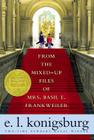
Basil isn't really what this post is about, though it is indeed one of my favorite spices. The actual subject of this post is how the children's book world recently lost one of its greats. E.L. Konigsburg, who passed away recently at age 83, wrote many smart, strange books about smart, strange kids. She's best known, and I think rightly so, for Newbery winner From the Mixed-Up Files of Mrs. Basil E. Frankweiler, in which structured Claudia and adventurous Jamie run away from home on a structured adventure and take up residence in the Metropolitan Museum of Art. She won a Newbery Honor the same year for Jennifer, Hecate, Macbeth, William McKinley, and Me, Elizabeth, and another Newbery Medal three whole decades later for The View from Saturday. The lady was amazing, and I'm glad that many are giving her her due.

In the few years I've worked here, we've lost the creators of quite a few of the books in the kids' section. The past few years have seen the loss of authors and illustrators including Maurice Sendak, Else Minarik, Donald J. Sobol, Brian Jacques, Diana Wynne Jones, Eva Ibbotson, Russell Hoban, Margaret Mahy, Simms Taback, Ray Bradbury... and each time, it's about the same. We bring in a few more copies of the departed author's books, we face them out on the shelves, and we reminisce - often with customers - over our favorite books. Sometimes we discover new favorites or rediscover old ones; the author's best-known work might date back to or predate our childhoods or those of customers. We didn't know these people personally, though we may feel like we did, and the stories are just as available to us now as they were before the sad news. Though a loss is a loss - the phrase "end of an era" comes up sometimes - the loss of an author can also be a reminder to say hello again.


Friday, April 26, 2013

Books for a Spring Garden Party

Oh, hello there. Please sit and have a cup of tea. Jeeves is readying the crustless cucumber sandwiches now and the crumpets are fresh from the oven.

So, what did you think of the latest Jodi Picoult? A bit macabre for my tastes? What do you suppose we should read for our upcoming fancy book club?

Oh, you know I quite agree that we should get multiple copies of books at a low cost from the Used Book Cellar at Brookline Booksmith. Quite right. Here's what they have on their ever-so-popular Book Club Picks shelf currently:

Major Pettigrew's Last Stand by Helen Simonson. A beloved pick for book groups
 missing Downton Abbey. A widower and retired major of the super-traditional British stripe strikes up a friendship with a Pakistani shopkeeper in his sleepy village. Their relationship sparks gossip as it develops into something more.

The Postmistress by Sarah Blake. Set in coastal Franklin, Massachusetts in 1940, a lady has taken the postal duties of her town over while the men are at war. But on one fateful day she KEEPS A LETTER, reads it and DOESN'T DELIVER. But rest assured this book will deliver on drama, suspense and juicy historical details.

The Pickup by Nadine Gordimer. A woman's car breaks down in South Africa and a young Arab mechanic comes to her rescue. Their ensuing relationship is weft through taught political and social intrigue in one of Gordimer's best.

Wednesday, April 24, 2013

Decisions, Decisions.

The other day I was helping a fellow bookseller work through a very difficult decision, one that we are faced with every single working day.  It plagues us incessantly as we walk through the aisles and go about our jobs, haunts us as publishers release new editions, and taunts us as UBC buyers take in books.

What books should I buy?

Now, we're about to delve into some dangerous territory where we judge books by their cover, but this cannot be helped.  We must be ruthless, so I've made a handy list of questions to help.

1. Does the design make you salivate, as in the case of The Geometry of Pasta? Does it set you down a journey to discover who designed a book with such continuity, the exterior moving seamlessly into the interior?  Does it make you bookmark a website (in this case, heredesign.co.uk) to look at later, eventually realizing this design team is behind several other books that caught your eye independently of this one?  Does it make you realize you need those books too?

2. Have you been meaning to read this book for ages, to the point where you are hiding from the person who suggested it to you because you keep meaning to read it but haven't yet?

3. Will the spines look good on your shelf, as is the case of NYRB Classics rainbow spines, or Melville House's Art of the Novella series? Will your guests sigh over the beautiful continuity on your bookself, one they will jealously imagine later on as they stare at their own, less color-coordinated shelves?

4. Are they part of a series of mass market paperbacks you have been collecting about a particular long-running British television show to facilitate occasional "Choose Your Own Adventure"-type reading, to hilarious results?  Because then you need to buy every single one you get your hands on.

5. Is it signed?  Will you let that book slip through your fingers, knowing it has been touched by an author you love?

6. Is it a new edition of a book you already own multiple editions of?  Yes.  Of course yes. The only thing is, you have to buy the rest in the series because they're right next to them, and used at that!  (Confidential to Penguin Classics, Harper Perennial and the like: You are my weakness, and I hope I never acquire the ability to overcome you)

7. Has this book been haunting you?  Do you flip through it any chance you get, admiring the pages and the words upon it?  Do you dream about it at night?

Buying books for yourself, especially among booksellers, can be an emotionally wrought process full of highs and lows.  In the case of my co-worker: she went home laden with heavy books but light with the glee of owning tomes she had been wanting for ages.  Good decision?  Yes.

Monday, April 22, 2013

Bringin' in the big cases


As promised, the Intermediate Fiction and Kids' Graphica sections have a swanky new space to fill!

Many thanks to all who helped get the new shelves from here...


to here...  


to here.


Best of luck as you move on!


Saturday, April 20, 2013

World Book Night 2013

In light of yesterday's tense and surreal events, we return to the Booksmith today to a rainy day and a crowd of people hungry for community and books. It makes the meaning of the forthcoming World Book Night highlighted all the more; when tough or scary things happen it's important to have anchors and reminders of our passions and the way we connect with our community and others outside ourselves to come together.

April 23 is a special day for book lovers. It's Shakespeare's birthday, and the anniversary of both his death and the death of Miguel de Cervantes, the author of Don Quixote considered one of the earliest novels ever written. For many years UNESCO has named it International Day of the Book, and for the past few years the UK has celebrated by giving out free copies of cherished books to celebrate.

For the 2nd year in a row the States are participating. Next Tuesday, the coordinated efforts of planners, readers, booksellers, publishers and UPS drivers will pay off when loads of literati hit the streets with a complimentary box of 25 copies of a title they've selected personally to give out to people who don't have access to books, or are even reluctant readers that just need a book pushed in their hands by an evangelist. I participated last year and this year am coordinating the Booksmith's efforts to get these books into the hands of those in our community who are ready and eager to spread the love of reading. We have a friendly and enthusiastic group of givers who have already begun to pick up their boxes of books! It's going to be an exciting night.


Furthermore, if you're a giver please join us and other givers at our reception today, April 20th at 2:00 PM in our Used Book Cellar so we can thank you for sharing the love with our community.

For more about World Book Night, check out their website here. If you missed the boat and want to participate next year, sign up today for the World Book Night newsletter, and as soon as they open up for applications you'll be the first to know.

Wednesday, April 17, 2013

Insert Nautical Metaphor Here

Up at the register this morning, I witnessed the following exchange near the vestibule that leads to the stairs to the UBC:

Customer #1: They buyin' today?
Customer #2: (Wizened nod) A few.

followed immediately by this one:

Customer#3: Do you think I should check downstairs?
Me: (Mystically) Yeah, I'd check.  You never know what is down there.

The UBC. They're fishers of books.  They have their tackle box ready for books. They're netting tomes in a vast sea of publications.  They're putting worms on hooks and reeling them in (okay, that part isn't accurate at all, there are few if any worms involved in the used book buying process and mainly involves customers coming in Wednesday-Saturday from 10-4 with bags or boxes of books). I'm done with these poorly constructed nautical metaphors.  Catch my drift?

By the way, John Boyne is going to be here on Sunday at 2 for his new book, The House of Special Purpose.  I've read it, loved it, and there aren't any nautical references that I can think of, so let that cleanse your palate.