Happy Spring! I'm sure most of you lovely readers are preparing for Passover, Easter or just the end of winter (albeit a very mild/practically nonexistant one)! Things have been very springy here in the store; flowers, bunnies, and matzoh-patterned pot holders adorn our store along with all the other spring holiday goodies just waiting to be brought home!
In my usual preparations for this spring holiday weekend, I have been spending my free time for the past few weeks stitching together brightly colored garments and detangling my unnaturally colored, four-foot-long wigs, and listening to Asian pop music.
I know what you're thinking: "Wait...
what?"
Yes, this weekend I will be joining my fellow nerds and attending Anime Boston, New England's largest anime convention. Every year, about 17,000 otaku (anime fans) gather in the Hynes Convention Center (often dressed as their favorite characters) to celebrate their love of anime, manga, video games, J-pop music, and other nerdy type things originating in Asia. It also happens to usually fall on the same weekend as Easter and Passover. So in honor of this glorious event, and to inform those not familiar with anime and its fandom, I will share some of my wealth of knowledge and passion on the subject.

In order to talk about anime, you have to talk about Japan and its history. For most of its history, Japan was basically isolated from the rest of the world. In fact, for about 260 years, it was isolated by policy: Between the year 1600 to the 1860s, no foreigners could enter Japan, save a small number of Dutch and Chinese merchants, who were mainly confined to a small island off the coast of Nagasaki. Some of you may have read David Mitchell's novel
The Thousand Autumns of Jacob de Zoet, which chronicles the story of a Dutch merchant who travels to Nagasaki during this period and falls in love a young female scholar. Beautifully written, this novel gives the reader an excellent picture of life during this unusual period and the clash between two very different cultures.

Then, in 1868, Commodore Perry of the USA sailed into Tokyo Harbor on a huge battle ship and After American Commodore Matthew Perry forcibly opened Japan in 1867, everything changed. Not only did Japan rapidly modernize its government, infrastructure, and society, but culture rapidly changed as well. One of the people most responsible for introducing this cultural change was Yukichi Fukuzawa. Born into a low-ranking samurai family, he went on to learn English, travel around the world, become a translator for the government, and found his own university with an entirely new way of teaching. Basically, he's the most impressive guy ever, and his autobiography is absolutely fascinating.
Since then, Japanese and Western cultures have influenced each other immensely. While Japanese citizens were adopting Western dress and customs, artists such as Vincent Van Gogh and Claude Monet were becoming inspired by Japanese woodblock prints and incorporating Japanese style into their own work.
Early anime (Japanese animation) and manga (graphic novels) were based largely on the style of Walt Disney, but the style has since developed into its own unique entity which now has become popular in the United States. Cartoons such as
Avatar: The Last Airbender are clearly influenced by anime, and many contemporary Western artists have adopted the flat, simplified, kawaii (cute) style epitomized by Sanrio and Hello Kitty. Children's books, too, have adopted this style: French artist Annelore Parot's
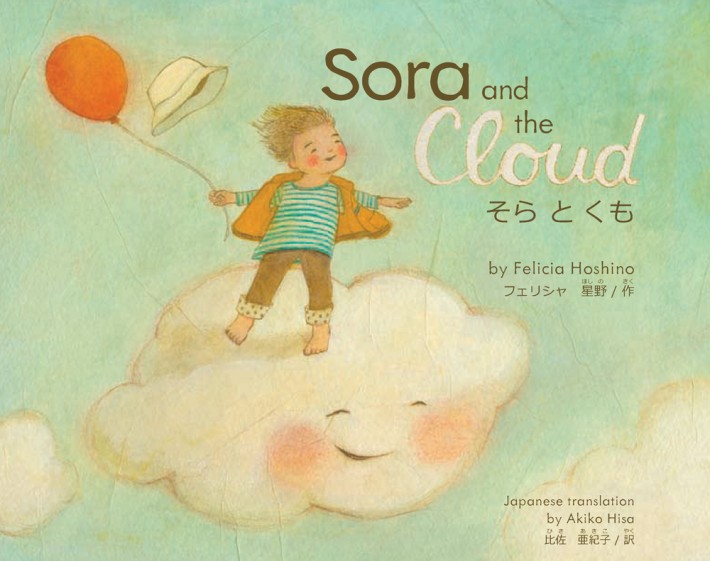
Kokeshi series clearly imitates that of Sanrio and many other Japanese artists, while Felicia Hoshino's bilingual book
Sora and the Cloud uses a much looser, painterly style.
Finally, for the animation enthusiast, I must recommend
The World History of Animation. This hefty and rather epic book shows year by year some of the most important works of animation from around the globe, including many Japanese films such as
Akira, My Neighbor Totoro and
Princess Mononoke. Looking through this book, I basically wanted to see as many, if not all, of these films as possible... but I think that would take a long time.
Anyway, I'm really excited about Anime Boston, guys. I look forward to a weekend full of crazy costumes, music, skits, dancing, panels, artists selling stuff, and everything else that happens at these things. If you find yourself in the Copley Place/Prudential Center area, you're sure to see many of my fellow otaku enjoying the weekend. Don't be afraid: even though we look kinda weird, most of us are pretty cool people. You might even see me! I'll have blue hair, if that helps.
If this blog post has inspired you to even join in the festivities, check it out! Create an instant anime costume with our Anime Eyes glasses; it's all you really need to look like a genuine otaku. Grabbing a few of our sushi-themed accessories or cute Japanese erasers can't hurt, either. Banzai!


 There were tons of bookstores in Tokyo, and even a neighborhood of used bookstores near the major universities. The reading culture in Tokyo is alive and well, with many of the passengers on the clean, efficient Tokyo subway lines reading paperback books carefully covered in leather, canvas, fabric and even tidy paper book covers. The displays in many of the stores were gorgeous and vibrant, twisted stacks to the ceilings, beautiful piles wrapped around the bookshelves, and book design is beautiful there, with many of the books in similar trim sizes, with a sewn in bookmark in the popular-sized paperbacks. There's even a magazine devoted to the art of book design and illustration!
 Kinokuniya was a little special for me because even though it's technically a chain, the only others I've visited were in Seattle and New York, two cities near and dear to my heart. I bought a copy of Alice in Wonderland in Japanese at the Seattle location, with a cool slipcase, and in New York I bought Finn Family Moomintroll in Japanese complete with illustrations. In Shinjuku, I loaded up on cute magazines with bunnies and stunning Japanese architecture magazines, and even rode the elevator with a real live attendant decked out in lace gloves and hat. I was on the hunt for a particular book and having trouble with the organization at one point (it didn't seem entirely alphabetical, even knowing the Japanese alphabet), and when I asked for help, the very kind and gracious bookseller bowed, ran to the computer, looked at me, excused himself and apologized profusely, dashed past me and returned with a Japanese to English dictionary and pointed at a word. "Not in stock." They have a single word for that! I thanked him, bought my treasures, which the cashier placed elegantly in the bag, taped shut, bowed and thanked me.