Tuesday, February 28, 2012

Destination: New York City

The majority of people who come into Booksmith read books, but what does it mean to read a city? Last Saturday, I traveled to New York City for a day to visit a friend. For the bus ride I had with me Teju Cole's novel Open City, which meant I was strolling the streets of NYC long before I arrived. Cole's narrator spends most of the book taking long walks around the city, sometimes interacting with its inhabitants, but often simply letting his thoughts converse with the city itself. So even as I approached the New York, I suppose you could say I was in tune with the city, ready to hear its voice wherever I went. I was not disappointed.

One of the first things I saw, as my bus pulled onto the island, was a soccer field. The ball was being passed up the field at the pace of my bus, so that just as I reached the end of the field: GOOAALLL!!! I had arrived. The city had greeted me, and, made attentive to its voice by my reading, I heard its welcome.

The conversation continued. At times the city seemed to speak directly into  the discussion that flourished between my friend and me as we walked its streets. We wandered around the south end of Manhattan, ending up almost by accident at the site of the World Trade Center. We walked around it, and I told my friend about Cole's impressions of the site as we formed our own. There was so much daily noise going on around us, so much construction within the fenced-in area, that the only space for reflection in that moment seemed to be in the gaping hole between the skyscrapers above us.

It was a relief, then, to stumble into the cemetery grounds of nearby Trinity Church, where a strange serenity reigned in the midst of the tumult of the city. By this time, our discussion had turned to questions of a somewhat philosophical, even religious, nature. Perhaps the church itself had inspired the topic, but it seemed to me that the opposite was the case: that we had initiated the conversation, and the city's spaces--now the warm, incense filled sanctuary of Trinity--had answered in kind.

And when our talk turned to the topic of transitions, it seemed important, even inevitable, that we happened to be making the watery crossing on the Staten Island ferry.

Books like Open City, intimately placed in a certain setting, offer not just the experience of reading a narrative, but also open our eyes to read the world around us. The next time you go somewhere new, learn to recognize its voice by reading the writers who have lived there, walked its streets before you, and have translated that voice into narrative. Then, when you arrive, you will find not just a city, but a story.

Friday, February 24, 2012

Magical Angry Robots of the UBC

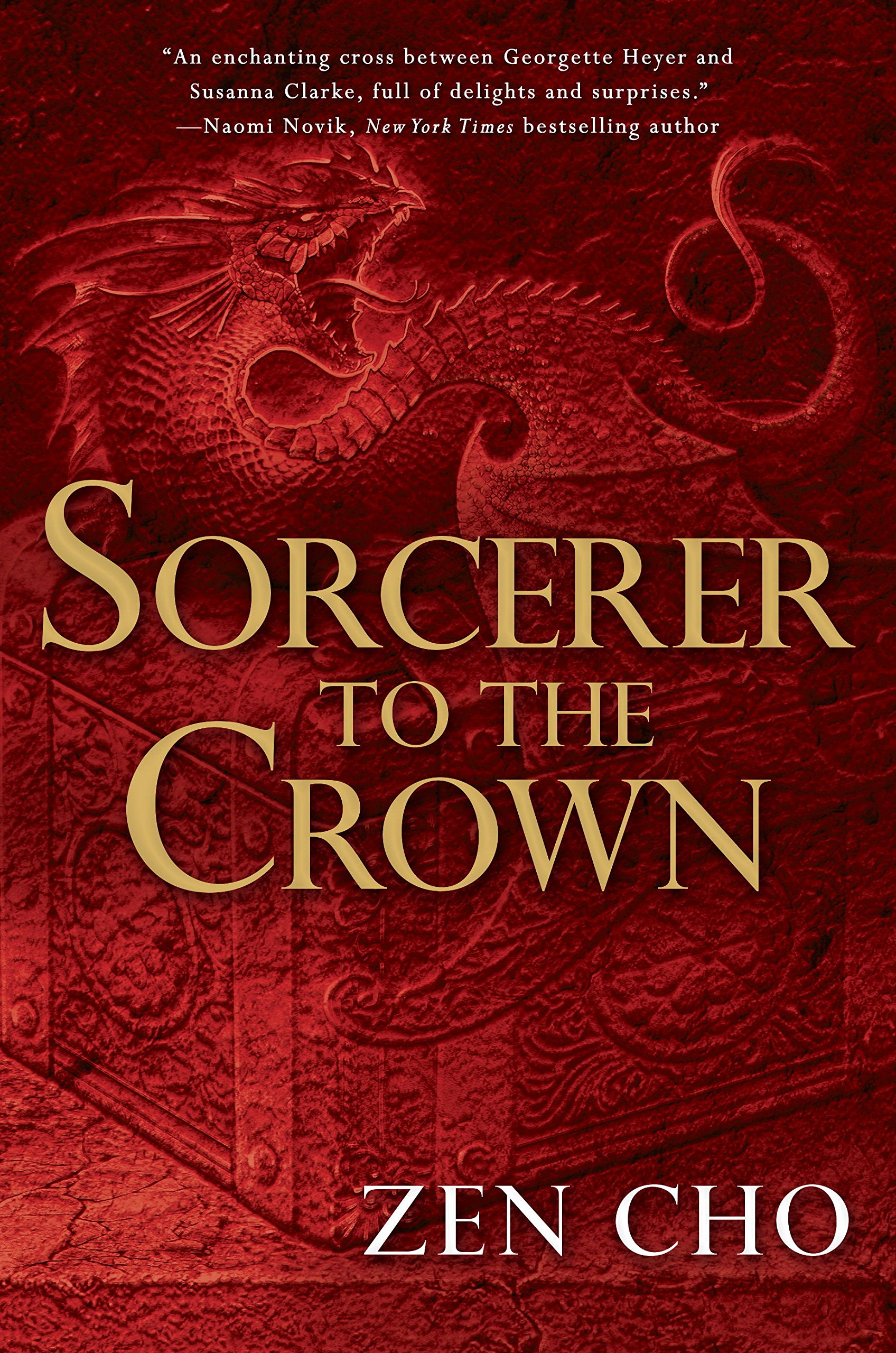
I was putting books away in the UBC when I came across this bad boy:
First of all, the design is awesome. I guess that's what caught my eye. So many sci-fi books look exactly the same, but this one stands out. Clean, simple, all white. It's summarizes the action up front and gets you excited all at the same time. And then I realized the publisher was called Angry Robot and they are based in Nottingham. I have fond memories of Nottingham from my Europe trip, and Angry Robot? Basically the coolest publisher name I've ever heard. Sorry, Penguin. 

So I thought I'd delve a little deeper and check out their website. And lo! This publisher is making it happen! Check out this Tom Gauld cover: 

They had me with the first line of the summary: "After accidentally summoning a demon while playing poker, the normally mild-mannered Chesney Anstruther refuses to sell his soul… which leads through various confusions to, well, Hell going on strike."  Umm, yes please!

Also: 


Sam’s job is to collect the souls of the damned, and ensure they are dispatched to the appropriate destination. But when he’s sent to collect the soul of a young woman he believes to be innocent of the horrific crime that’s doomed her to Hell, he says something no Collector has ever said before.
“No.”
Like, whoa. 
That's the magic of the UBC. Finding one book down here can spark additions to a reading list I'll never see the end of AND a lifelong loyalty to rad publishers that don't get a lot of attention otherwise.

Thursday, February 23, 2012

Team Zoe Gets Real About Easter


Forgot today was my blog day, so here's a picture of Team Zoe modeling
 the latest in abstract Easter bunny ear headbands.
Intrigued? 
Visit our store to see what else we have available for your Easter/St. Pattys day needs!

Wednesday, February 22, 2012

Eco Baby!

That's right, we have even more toys this week -- now for the younger ones -- brought to you by Hape!

"Toys are made to make children happy.  But for Hape, a toy means much more.  Each toy we make is a combination of high-quality materials, unique design, educational ideas, fun and ecological behaviour..."  All toys are solid wood or bamboo and printed with soy inks or water based color.


Happy Hour Clock

Not only are the numbers puzzle pieces, but it is a great way to learn how to tell time.  With movable hands, seconds and minutes shown, and stating when "quarter past" is, it makes for a great learning tool. (ages 3+)


Little Drummer
It's your basic toy snare drum and a great way to introduce music and learn rhythms. (ages 1+)


Pandabo
So many parents claim their child is too smart for games deemed as three and up.  Try this one.  It takes more than skill, it takes balance.  All of the bamboo sticks -- square green sticks, half round blue sticks, round sticks, and triangle yellow sticks -- must be placed on the panda, but they can't fall off.  Sometimes you must place two sticks on his rocking body, but that's up to the dice.  It's a lot harder than it looks! (ages 3+)


Rapido
The first person to catch and match the balls in their catcher, based on the pattern of their card, is the winner. (ages 3+)

Tuesday, February 21, 2012

Destination: The Open Road

Afghanistan may not be on the top of many of our lists of Places to See Before We Die. The country is not exactly promising to flourish into a tourist destination in any near future. Even if you wanted to travel there, you might find your road difficult, perhaps dangerous. Unfortunately, not all roads in life are open to us. That's why we have books. Others have gone to the places we've always wanted to see before us, paving the way for our own travels--if not by car, train, or airplane--by armchair.

In 1939, Annemarie Schwarzenbach and Ella Maillart made the journey from Geneva to Afghanistan by car, becoming the first women to travel Afghanistan's Northern Road. Both women were writers and preserved their experience for those of us who can only dream of making such a venture into unknown territory. Maillart published her account in The Cruel Way, and now, for the first time, Schwarzenbach's record of the journey has been translated and published as All the Roads Are Open.

Annemarie Schwarzenbach
Schwarzenbach describes her awe at finally seeing the place names she had only read about as a child. "In the classroom, I stubbornly refused to believe the names I learnt and read on my map could take form before I'd seen them with my eyes, touched them with my breath, held them as it were in my hands," she writes, reminding me of something I learned about child development by watching my co-worker Paul's children grow.

As infants, we do not have faith in object permanence, believing that what cannot be seen does not exist. If a person leaves the room, they are gone forever; their reappearance is a shock and a thrill. Paul's two-year-old still gets a kick out of peek-a-boo: now I'm here, now I'm not, wait--now I'm here again! "The simultaneity of near and far confused me;" Schwarzenbach remembers, "I had grave doubts that at any given moment life might reign both here and there, on this side and that side of the seas and mountains."

As I read Schwarzenbach, I began to think that perhaps we do not grow out of our infant skeptism quite as quickly as we suppose. In the least, remanants remain, in the form of longing for the things we cannot see, the people who have left the room indefinetly, and for the places we have only read about. "Such doubts," Schwarzenbach speculates, "demanding resolution, may have inspired my earliest journeys: I went forth not to learn what fear was but to test what the names held and feel their magic in the flesh, just as, at the open window, you feel the miraculous power of the sun you'd long seen reflected on distant hills and spread on dewy meadows."

Lucky for us, Schwarzenbach's "going forth" led her into lands so foreign in their language, so breathtakingly beautiful in their epic landscapes, so full of fantastical characters and cultures, we have trouble understanding their reality. Even as adults with a firm grasp on the permanency of objects not seen, it can be difficult to remember that such places exist, far from here, in an everyday as we do here. By reading travel narratives such as Schwarzenbach's we can remind ourselves of that immense reality, and, more than that, participate in something of the magic of the journey itself. Come in to Booksmith and browse our Destination Literature section, where an open book is equivalent to an open road.

Monday, February 20, 2012

Allow me to introduce myself: I am Julia and I have a cold.

Hello, fine followers of the Brookline Blogsmith. I am Julia, resident of our famous Card and Gift section and newest contributor to our lovely blog. I like cats, Japanese animated films, sewing, and not being sick. But alas, winter has bestowed upon me a cold that just won't quit. Thus, in the spirit of sickness, I will share with you some of my favorite books about disease--and some items to help you deal with it.


Siddhartha Mukherjee's The Emperor of All Maladies doesn't really need an introduction, as it's already won the Pulitzer Prize and been a bestseller since its first release in November 2010. But man, can this guy write. Cancer isn't exactly the happiest of topics to spend your time reading about, but if anyone can make cancer look good it's this guy (I mean, not good, but... well, you know). From its very beginnings to the most recent research on the disease, Mukherjee covers pretty much everything. You'll finish this book feeling about as knowledgeable about cancer as you can be, aside from actually being a doctor or researcher. For me, this book just makes me feel better about the fact that I only suffer from a bad case of the sniffles.


And if cancer isn't enough to sate your appetite for the grotesque plagues upon mankind, check this out. David Grann's The Lost City of Z isn't specifically about sickness, but heck, if getting lost in the rain forest doesn't scream "creepy, deadly diseases and insects," I don't know what does. The book covers the history of one Col. Percy Fawcett, a member of the Royal Geographical Society who, in the early 20th century, made multiple trips into the Amazon, mapping out this mysterious part of the world, befriending natives, and displaying his superhuman powers of resisting any and all diseases that one can acquire in the rain forest (he later mysteriously disappeared searching for an ancient civilization, which is the main topic of the book, but that's beside the point right now). Needless to say, exaggeration was common in early explorers' descriptions of the flora, fauna and natives of this area, but stories of the hardships of Fawcett's unlucky companions (almost all of which contracted horrifying and nearly fatal diseases/infections on your journey) might just turn your stomach... so I'll spare the details for you readers who are faint of heart. Why hundreds of people of people would risk--and sometimes lose--their lives exploring this place is beyond me, but it makes a fascinating tale.


Now Julia, you may ask, do you only read such morbid texts? Well, I reply: all right, not everything that catches my attention is so gross. I will leave you with one more book, one that offers a glimmer of hope for that banes of human existence. Wendy William's book Kraken: The Curious, Exciting, and Slightly Disturbing Science of Squid gives a surprising amount of information relevant to us vertebrates. Okay, so the word "disturbing" may be in the title, but really, doesn't it intrigue you that researching the neurons of squid could help find a cure for Alzheimer's disease? That their brain cells are identical to ours, but we currently have no clue how to measure the intelligence of squid and their cousin the octopus? My inner nerd is showing here, but cephalopods are pretty friggin' cool. So, when you feel like learning about some of the most fascinating sea creatures out there, check out this book. Seriously.


For those of you concerned about catching my germs the next time you come to peruse our shelves, worry not; I have two days off coming up, and come Thursday I should be fit as a fiddle and ready to help you with all your card and gift needs. Tonight I plan to go home and heal up with some of our great gift products perfect for a relaxing evening. I'm thinking one of our Paddywax tin candles in a variety of calming fragrances; I'm partial to Paperwhite. These soy-based candles burn cleanly and last in the ballpark of 45 hours, so I'll be treated to relaxing, non-overpowering fragrance for as long as I want.


While I'm at it, perhaps I'll treat myself to a nice cup of hot tea from one of our Keep Calm and Carry On mugs--a mantra that applies quite appropriately to me and my fellow Card & Gift teammates, especially during our huge 50% off sale. And hey, last time I checked we even had a couple of these items on our sale tables (only slightly dinged up), so get them while they last!


Well fine readers, thank you for indulging in the rantings poor sick giftseller. Next time I promise to talk about something slightly less gross. I hope this will be the start of a very fond (and healthy) friendship.

Sunday, February 19, 2012

I keep forgetting that the body remembers...


I'm realizing now how much this blog speaks to Zoe's last post, which I believe speaks to a larger shift that is happening either because of the seasonal ruminations, or perhaps a marked increase in my dairy consumption. Either way, if Zoe and I are thinking about this stuff, ya'll must be too. After all it is almost time for the rabbit, clover, Passover and Purim to make their way into the proverbial "candy aisle" of our collective third eye.

It is the season of waking up, and often times waking up means that weird tingling after you have been sitting on your foot for hours on end eating Cheetos. Such waking can be alarming and uncomfortable. It always involves the body making noise and moving and feeling stuff. Although it hasn't been a real winter, it has been a winter, and the fever of spring is a comin', especially today.

Usually before we open on Sundays I take a moment to browse and see what's new. As my interests have taken a serious about face in the direction of yoga, I found myself in our yoga & health section. What I found there was kind of amazing. I picked up Overcoming Trauma through Yoga, and realized after a bit that these authors were local, and that the institute they work for is literally down the road form this here!
Who knew this was right under our noses here in Brookline?

:Learn more about classes and services here:

Right next to that title was Ana Forrest's book Fierce Medicine.


Ana is famous for her eponymous brand of yoga which is touted for dealing head-on with internal walls and blockages that have kept the individual form realizing their true spiritual and physical capabilities. Ana herself is open about the trauma she endured in early life, and how she fashioned herself a a form of healing though her own yogic "fierce medicine". The book is radical and moving. I like the fact that she's a little more rough and tumble than the other famous yoga memes.

As the creator of Forrest Yoga , Ana T. Forrest has been transforming people’s lives throughout the world for more than thirty-five years. Her unique blend of physical practice, Eastern wisdom, and profound Native American ceremony takes her teachings literally off the mat and into daily life—to heal everything from addictive behaviors and eating disorders to chronic pain and injury. In Fierce Medicine, Forrest tells her own story of healing from the scars of abuse and physical handicaps, and reveals the proven practices that enabled her to move beyond her past into a life committed to helping others reconnect with their bodies, cultivate balance, and start living in harmony with their Spirits.

Sometimes this store is a deck of Tarot cards...as you are shuffling through the aisles you are likely to stumble into a pocket of meaningful directives; put there by some benevolent force to help guide you through this transition ino spring, that itchy overly-happy optimistic season of pastels.

(And by "benevolent" I mean bookseller.)