Wednesday, August 10, 2011

Location is everything


Couldn't have said it better ourselves (thank you friends from across the river).  Please shop local so that we can stay local!


Local businesses not only give back to the community, but are filled with knowledgable staff.  Buying local is also a great way to stimulate the economy.  Don't you love (or miss) browsing books at your fingertips and with your whole hand?  Being able to turn to any page you want without "sorry you cannot view this page" or some nonsense like that?  Wait, there's a bonus, too -- continue reading it on your way out the door and when you get home.  No post or wireless required.

Great indepenedent minds stores think alike.

Tuesday, August 9, 2011

Literary Destinations

I was about to write more about our new Destination Literature section, highlighting travel essays and literature in translation from different countries around the world. But then I read Kate Taylor's article in the New York Times, "Fiscal Woe Haunting Baltimore Poe House." Due to lack of funding, the Edgar Allan Poe house museum may be forced to close its doors. Ever since I read in a recent issue of Tin House, A.N. Dever's "On the Outskirts," about her pilgrimage to the Poe House, I have wanted to visit. The thought that the Edgar Allan Poe house museum may be nevermore, is haunting me.

Our Destination Literature section at Booksmith is full of literature meant to lead your imagination to new destinations. When I heard about the threat to this specific literary destination, I began to think about the importance of our nation's literary sites. Like many readers at Booksmith, one of my favorite reading experiences is witnessing the very real connection between literature and life. Nowhere is this relationship more tangible to me than when I am touring the old haunts of an author, walking through their landscapes, enjoying the view from their writing desks. In her Times article, Taylor reports that Poe's presence is very much a part of the Poe House experience, described by guests as haunting and, well, creepy.

I also began thinking of other literary landmarks, even closer to home. One of these is the former site of the Old Corner Bookstore, located at Washington and School Street and once home to Globe Corner Books, which recently closed their doors to Harvard Square. Part of the impulse to expand our travel literature section began with the announcement that the Globe Corner would close for good. When the Brookline Barnes&Noble closed, we expanded our magazines, when Bob Slate closed, we accomodated with a new "Writer's Corner" full of beautiful stationary, journals and art supplies. Booksmith continues to strive to meet the needs of Boston's literary community as the physical spaces devoted to the promotion and provision of literature continue to shrink.


While most readers will remember when the Globe Corner Bookstore was housed at the Old Corner, few can remember the Old Corner's prior residents. The brick building was built in 1712 and from 1833-1864 was the site of a thriving publishing scene, at the center of which sat publishers James T. Fields and William Davis Ticknor. Next to Ticknor's desk was a chair reserved for Nathaniel Hawthorne. Ticknor's young partner Fields worked behind a green curtain in another corner, entertaining the writers on which America's literary foundations rest. Henry Wadsworth Longfellow, Oliver Wendell Holmes, Ralph Waldo Emerson, even Henry David Thoreau all frequented the store in which Boston's literary conversation had its beginnings.

I like to imagine I can still here echoes of that conversation in the aisles of Boston's remaining bookstores. Yet the site of the former Old Corner Bookstore remains empty. For awhile, a Borders thrived across the street, but even that bookstore is closing. The last business I noticed on the Old Corner was a jewelers. Now the Old Corner Bookstore sits empty, its significance marked only with a small plaque, which took me four tries to locate when I first hunted the site down on the Freedom Trail. Services are still held in the church where Paul Revere hung his lantern, the famous harbor is still a thriving port. Yet another of our country's literary sites stands disreguarded at the Old Corner.

Even if a bookselling business can no longer be supported at the site, why not some sort of memorial, something like the first Museum of the Book, a site dedicated to connecting our literary scene today with those of the past? I'm ignorant of the financial cost, but aware of the cultural richness such an endeavor would create. And where better than Boston, seat of our nation's literary beginnings, for such a museum? And what better time than our era of change and innovation, to remember, record and reinstate the value of the enduring book and the spaces to which it takes us?

Saturday, August 6, 2011

Another book-binding!!!


I have two dear friends who may be cranky I'm posting this, but I left their pretty faces out for their privacy. Yesterday was their wedding, and it was amazing. They eliminated ego and pomp, gluttony and the consumer expectations all tied to the young North American marriage expectation, and did it their own way, and quite frankly it was the most delightful wedding I have ever been to...(My Pa's been married 4 times so trust me I'm an expert.)


They got me thinking about all the resources available to us if we decide we want to have a small, DIY community grown wedding. The store has a fantastic craft section, a large wedding magazine collection/ section and tons of affordable quirk in the C&G. After that they found friends to do amazing photography; specifically Lindsey Metivier, (Owner of Aviary, a stunning and sweet gallery in JP.) (The pics here are mine...I compulsively took these oldy-looking pics but that's another blog on self-control and simulacrum.)


For their flowers they asked the wildly talented former employee of the Booksmith, Moira Thompson to arrange their stunning flowers. She now owns her own floral business called Moss.


There is so much local affordable talent in this town, it is a shame to look anywhere else.

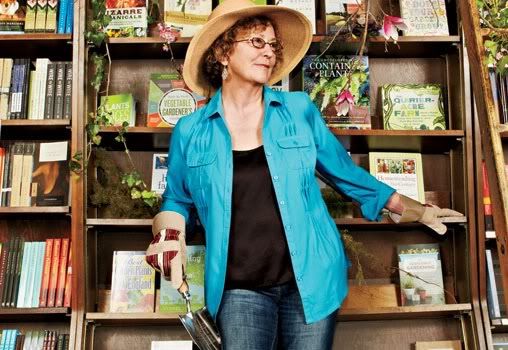
They finished off with a photo shoot on our ladders amongst our stocks surrounded by their mutual love of books. If this sounds familiar, or smacks of all the "love- local" rhetoric, well good. I meant it to. Their fierce independence, and love of each other reminds me of this Emerson quote.

"Why do we need to follow the Doric or the Gothic model? Beauty, convenience, grandeur of thought and quaint expression are as near to us as any, and if the American artist will study with hope and love the precise thing to be done by him, considering the climate, the soil, the length of the day, the wants of the people, the habit and form of the government, he will create a house in which all these will find themselves fit together, and taste and sentiment will be satisfied as well."


-Emerson


To fierce independence, love, and life.


Friday, August 5, 2011

Results.

I stopped listening to the news for a while, recently.
You know how when two people are arguing about the same old thing every time you come into the room, and for a while you hang around because you think maybe you need to be in on this, maybe this is important, but then, after perhaps the twentieth day in a row of walking into the middle of the exact same argument, you just decide to quit coming through that door? Because there's nothing there, just a lot of words that aren't talking about anything real. And neither of them really believe what they are saying anyway. You begin to realize that they are only saying the things they are saying because you appear to be listening.

I just finished reading an advance copy of Neal Stephenson's next novel (he'll be reading here in September, get your tickies, folks.) Without giving anything away, I'm gonna talk around the main concept, because it kinda hit me over the head. The online world is, in the end, a figment of our imagination, and as time goes on it's main purpose increasingly becomes the movement of virtual money around virtual space; just like most sectors of our real Economy are basically ways to move virtual money. And when a little unobserved player in that online world figures out a way to make some of that virtual money flow his way, big things start to happen in the real world, with real money, and real lives. And real deaths occur, at the business end of any of the trillion guns lying around all over the place (lying around in especially great density in America.) It's a really good book to read if you want a sober look at how a motivated terrorist who feels he has something to lose can move around almost at will in the world. Oh, and if you want to look at America's gun culture. There is not one page that isn't about guns. So here's a writer, a big idea man who has, several times now, redefined the field of science fiction, putting aside what is virtual and fabricated in order to talk about what is real: all the things that get people killed these days.

For dinner I plucked from the shelves of the Used Book Cellar a copy of The End of the Third Age: The History of The Lord of the Rings, Part 4 by J.R.R. Tolkien's son, Christopher Tolkien. While I would recommend the reading or re-reading of The Lord of the Rings, immediately followed by The Silmarillion, to anyone who is able to read, I would recommend to almost everyone that they not read the younger Tolkien's history of the creation of the books. Every scrap of notes and nearly illegible revisions has been pored over and compiled into a massive shelf full of books. Do you want to hear about the minute deviations from the published version in Tolkien's third revision of the tale of the fall of Gondolin?

Well, I do. And I think I know why, now. As I was reading half a dozen variations (that Tolkien was working on over the course of several years) about Frodo's and Sam's desperate journey from Cirith Ungol to Orodruin, or Mount Doom, a warm, happy and hopeful feeling came over me. The feeling, which is with me still, seems to be unrelated to the words on the page; unrelated to the hard-edge of anger that Stephenson's novel had left in me; unrelated to the pathetic and hysterical unraveling of our democracy (which, in the end, is the only exceptional thing that America has ever had going for it.)

The warm, happy and hopeful feeling seems to be saying that, whatever it is, you can put it down on paper, and then come back and try it out another way. And try it again, from a different angle. And again. And again. Until it comes out right. Maybe it isn't true these days for those in Washington, who can only do their work by speaking coded messages into clusters of microphones. And it definitely isn't true, in this lifetime anyway, if you happen to get shot by some divinely-deluded jerk with an assault rifle.

But it is true for each one of us, if we are engaged in creating something.
Failure is the thing that causes you to revise, and eventually to advance.
Failure is to be welcomed in, then left to its own devices.

Thursday, August 4, 2011

We Don't Really Know Anyone Well, But We Love One Another

First of all, I went driving again yesterday and I don't mean to brag but I'm basically the best driver in the whole universe. Nobody believes me because of that little incident when I ripped the stop sign out of the ground but guys, I was negotiating lights, I was stopping appropriately at stop signs, I even turned around in a driveway. Yeah, I know. Sophisticated stuff.

Everyone always gets on my case because my blog posts are too long, so this one will be abbreviated.


I really liked this collection of poetry. Franz Wright's other ones are pretty good, maybe a little heavy on the God stuff for my personal taste. I liked "Walking to Martha's Vineyard" so much because it's more about people than it is about the divine. My favourite poem from this collection is "5:00 Mass":

The church is a ship in the brightening snowstorm;

shafts of light falling in through blue windows.

It’s almost night and starting to get light!

The planet, too, adrift

in an infinite blizzard of stars –

Where most of us are sick

and starving in the pitching dark, and the partying

masters up above

don’t know where we are either.

We love one another. We don’t really know

anyone well, but

we love one

another.


I love the imagery there, and the reference to the "partying masters up above don't know where we are either". The idea that there are Gods/a divine presence but they are paying little to no attention to humanity. But anyway, Wright has a new book coming out in September that I'm desperately trying to get an advance copy of. Its called "Kindertotenwald", this is what the Random House website has to say about it:

"A genre-bending collection of prose poems from Pulitzer Prize–winner Franz Wright brings us surreal tales of childhood, adolescence, and adult awareness, moving from the gorgeous to the shocking to a sense of peace. Wright’s most intimate thoughts and images appear before us in dramatic and spectral short narratives: mesmerizing poems whose colloquial sound and rhythms announce a new path for this luminous and masterful poet."

On snap, if there's somebody that loves "surreal tales of childhood, adolescence" more than me, I don't want to meet her. Such a creature would surely be fearsome to behold.

Wednesday, August 3, 2011

90's meets Facebook

Remember the 90's?  VCRs. CD-Roms. Static dial-up of the Internet.  America Online disks.  Life before FaceBook?

Jay Asher and Carolyn Mackler's The Future of Us is a serious comedy and a definite novel of awesomeness.  While teenagers in the 90s, Josh and Emma discover that they can view Facebook.  After they figure out that they are the people on it -- and why someone would put so much random information about themselves on the Internet is beyond them -- they discover it's their lives fifteen years in the future.  They also discover that they can change their futures by deliberate and stupid acts. 

It all comes down to the fact that if we knew what our futures held and could change them, it's not just the future that would change. Really, if you could visibly manipulate the future, would you be afraid of reality or live in the moment?

I thought it was a book that I would read and then pass on.  Nope. It's a keeper.  I love it!  This will be one of the best young adult novels to hit our shelves this year (and Jamie, our YA expert, agrees!).

To be released November 21st.