Friday, October 14, 2011

Foreign Correspondent

From the trenches of the Used Book Cellar, the latest foreign delicacies imported for your perusal.

It's fun to occaisionally see foreign editions of beloved books come across our buying desk. We don't get too many, and unfortunately don't buy too many as only well-known titles or titles in specific languages (French and Spanish) tend to sell the most, but here are some super cool ones, with newly interpreted covers worth scoping out.

Morto Até O Anoitecer, or Dead Until Dark, the first in Charlaine Harris' Sookie Stackhouse series, the inspiration for the HBO series True Blood, in BRAZILIAN PORTUGUESE! Check out this spooky cover!


Mesajci, or The Messenger, the third in Lois Lowry's Giver trilogy, in TURKISH!

And finally, three volumes of George R. R. Martin's fantasy epic "A Game of Thrones" in FRENCH! According to the list at the front of the book, each American version of the novel is broken up into 2-3 volumes in the French translation. But that's okay, because the covers feature amazing art, and the more the merrier. We currently have volumes 9-11, the end of Storm of Swords, and most of  Feast for Crows.

Thursday, October 13, 2011

You're Not the Boss of Me.

" 'I believe that within every great reader there are multitudes of people,' [Sarah McNally of Mcnally Jackson Books] said. 'And you have to open yourself to all of them. I love British chick lit and I love Proust. Don’t judge yourself! There are so many kinds of writing that are great but bear no relation to each other. ‘A Book of Memories’ by Peter Nadas is like climbing a mountain. ‘Cutting for Stone’ is like going down a waterslide.'


Book-buying is aspirational.' She added. 'They are deeply hopeful purchases.'


- Sarah McNally, McNally Jackson Books, 52 Prince Street, NY NY. 

I read this quote in McNally's recent profile in The New York Times, and it resonated with me in a couple of ways. I don't know what our policy for mentioning other independent book stores on this blog, but I imagine it is inclusive and perhaps, even "psyched". I have included links to both the NY Times article and McNally's website, and if anybody is planning a trip to NYC any time soon, I recommend checking this store out. 

I believe, above all, in being oneself. I, myself, have a big personality that I frankly cannot hide, nor can I pretend I don't enjoy the past times that I enjoy. I've always been a nerd. Mostly about nerd things, like science fiction or zombies or tv shows about vampire slayers, what have you. I used to try and keep it on the down-low, like maybe it wouldn't come up, but it always does, ya'll. Somebody, off to my peripheral, will ask a question like "What, exactly, is Dr. Who?" or "What kind of spaceship are they on in 'Firefly'?" and I will be forced (forced!) to jump in. 

My goal for you guys, when you enter our store, is to not feel like you can't be 100% into whatever it is you're into. When Twilight came out, we got so many 20+ year old women (and some men), shame-facedly coming in and asking where the Stephanie Meyers books were, already planning how they were going to sneakily read it on the T on the way home without giving themselves away. To those ladies and gents, I said nay! You have but one life to live, and if you have a freak flag, by all means, let it fly. Don't be afraid to tell everyone that they're not the boss of you. I don't know when that happens, when we stop saying that, maybe its when we get actual bosses? And everyone just assumes they don't have to proclaim it anymore? I make it a point to say it at least once a day. You're not my mom! You're not the boss of me! DON'T TELL ME WHAT TO DO!

Try it. It's awesome. I mean, don't get fired or anything, maybe just yell it at your roommate/dog/nanny, or what have you. You and your spouse can yell it at each other and then make out. I don't know, I can't make that decision for you. I would never. If someone tries to make you feel embarrassed about reading something silly, or that what you're reading isn't 'smart' enough or 'cool' enough, you can just tell them what's what. You know more than you think you know, and you are better equipped to handle life than society has led you to believe. Reflect this mantra in your every action. Read Twilight unabashedly on public transportation! Ask me where the Karma Sutra page-a-day calendars are!  Ask to exchange a political science tome for the new Jodi Picoult because the second you got it home you realized what your heart of hearts wanted was a satisfying novel. I dig you, customer. We all dig you, come on down. We're book people too, we understand these little heartbreaks of life.


 I couldn't finish The Corrections and I couldn't start Infinite Jest, because my big dumb soul is too full of a beautiful, terrible hope. I read The Room and A Stolen Life as my 'beach reads' this summer. I recommended a vampire novel (Let the Right One In) to co-workers that are almost incomprehensibly smarter than me, and I did it with a smile on my face and a song in my heart. And if you think that I'm naive, that maybe a fourth-year English major should be a little more selective in her literature and spend a little less time on the internet, shut her big mouth and treat this serious business we call life with a little more respect, then,well. That would be something I would definitely take into account.


If you were the boss of me. 

Tuesday, October 11, 2011

Destination: Eastern Europe

A few years ago, I was traveling with my sister and her husband in Serbia. We spent a day visiting a cluster of monasteries situated at the heart of the Balkans and spent a night camping on top of a wind and rain swept mountain. We woke the following morning shivering and damp, and quickly drove down the mountain to a small village, in search of some hot coffee.

It was difficult to find. All that was served in the marketplace that morning was rakia, Serbia's famous plumb brandy. My brother-in-law laughed at my desperate expression in the rear view mirror. "It's like the Serbs are saying, 'To hell with the Turks and their coffee.'" The three of us downed the burning liquor without complaint and climbed back into the car. Sufficiently warmed, I curled up in the backseat and pulled out Ivo Andric's Bridge on the Drina. In its pages, I found our breakfast explained:

"It was a cold day in late autumn and there was no coffee maker on the kapia, nor had the town Turks come there to sit and drink coffee. Therefore the people of Okoliste sat down as if they were at home, opened their bags of food and began a fresh flask of plum brandy."

That brandy breakfast convinced me of the necessity of story in understanding cultural experiences other than my own. Andric's book is a marvelous introduction to the stories that shaped the cultures of Eastern Europe. As epic as the bridge itself in dimension, this book spans centuries, yet never looses the reader in time, encapsulating each era in unique story.

Andric spent his childhood in his mother's village of Visegrad, on the banks of the Drina. Growing up at play on the kapia of the bridge he made famous, the legends surrounding the bridge were imbedded in his memory. Bridge on the Drina begins with the children of Visegrad and the colorful myths they were told about the bridge's origins. Andric's book draws on such stories to paint a complex portrait of a region whose history remains an enigma to many of us in the West.


Not far from where Andric's book sits on the Eastern Europe shelf of our Destination Literature section, you will find several titles from writer Dubravka Ugresic. This week Ugresic will be reading from her new book Karaoke Culture on Friday at 7pm in our events space at Booksmith. Ugresic was born in Yugoslavia, but left Croatia in 1993 and often writes about the plight of Yugoslav exiles. This story is particularily well-told in her novel The Ministry of Pain, in which a professor of literature in Amsterdam encourages her students to write essays indulging their nostalgia for their homeland and exploring their experiences in exile.

I first came across Ugresic's work in her essay collection Thank You For Not Reading, in which she applies her sharp wit and critical eye to publishing and book culture around the world. It may be a bit of a stretch to apply the term "exile" to those of us who still cling to the book as a work of art, but I couldn't help thinking, while reading these essays, that Ugresic's ability to identify with a downtrodden or forgotten culture makes her the perfect champion for the cause of the book.

And what better way to preserve a culture than to keep its myths alive. Ugresic's novel Baba Yaga Laid an Egg, does just that, by transforming the ancient Slavic myth of Baba Yaga into a postmodern narrative that follows four contemporary women around Eastern Europe. While Baba Yaga is commonly thought of as an evil old crone, Ugresic's work goes back to earlier oral traditions in order to restore beauty and dignity to the modern women of Eastern Europe. Not unlike Andric's achievement, this tale captures readers of any culture, bringing a far off part of the world right to your breakfast table, whether you are serving coffee, or plum brandy.

Sunday, October 9, 2011

Tears of a Clown: How to be a 12 Year Old Girl


So first things first, Netflix uploaded "The Wonder Years" to Netflix streaming, and it might be the best thing to ever happen to my life. In addition to that, I received in the mail (yeah, I'm now paying the $20-odd dollars or whatever it is every month so I can have streaming AND discs sent to my house, because the third season of The Gilmore Girls isn't going to watch itself, internet) the movie "Now and Then", which is a 90's movie with baby-faced Christina Ricci, Gaby Hoffman, and Thora Birch, among others. I've seen it before but surely, something happened to me months ago that prompted me to add it to my Netflix cue and immediately forget it until it arrived a few nights ago.

As I watched the movie, I was struck by how closely some of the things had mirrored my preteen experience. I, too, had a very close-knit group consisting of four female friends, each with their own quirks and differences. I, too, had long, patternless summers where we ran wild and free. The movie is set in a suburb in the 70's, so while I couldn't empathize with being able to ride your bike everywhere and get black cows down at the local diner, I got the jist of what emotion was being prompted of me. My actual experience was closer to taking the red line to Harvard, getting burritos at Anna's, or walking into Allston, a place my mother warned me about the dangers of every single time we went there. The dingy little shops we used to wander around with wide-eyed amazement is now about a block away from my apartment.

There was one moment that truly got my attention though, besides the part where Gaby Hoffman is narrowly rescued from drowning in the sewer by the town tramp, a man the girls refer to as "Crazy Pete", was the fact that, several times during the movie, our heroines are playing truth or dare, and they always pick truth. This is an obvious move, you may think; dare is always embarrassing, always involves either getting naked or doing something you will regret later. My friends and I always used to choose truth, no matter what. I hadn't thought about it until that moment, but what if truth or dare is actually some epic catalyst of the Young Female Experience? Groups of girls, detached from time, joined together through a mundane exercise in sharing secrets? Nobody ever mentions it because it seems like something so minuscule; obviously, everybody plays truth or dare. But its not obvious, not to me. That means there is something inherent within truth or dare that fulfills some biological desire that we all have when we're about 11 years old. That's fascinating to me. Growing up in a world where things are obsolete easily within the year of their creation has instilled in me a fascination of things that don't seem to ever go out of date. Truth or dare has survived generations. When I was 11, truth or dare was part of life, along with a slew of other things that I doubt I would have made it out of adolescence without. The following is Zoe Hyde's "In it to Win It" emergency crash-landing kit of how to get through your preteen years with minimal scarring, maximum fun, and zero making out. Sorry ladies, I have many talents, but that was and is not one of them. You're on your own with that one.


Scary Stories to Tell in the Dark is key. You are going to be attending all-girl sleepovers, and going on school trips, and eventually would-you-rather and gossiping is going to get old (I mean, it'll take a while, but it will get old). When this happens, the best thing to do is turn out all the lights, whip out a flashlight and pretend to be scared. I don't remember if Scary Stories actually frightened me as a child, or if we were just affecting it, but it doesn't matter. These books will serve you well after a horror movie marathon, or in any kind of camping situation you might find yourself in. If you can get your hands on them, I also recommend listening to the books on cassette, I know they used to have them in the children's section of the Brookline Public Library.  Caveat Emptor: Do not try and memorize these stories and pass them off as your own if you have a smarty mcsmartypants best friend named Gabrielle who is going to totally call you out on it in front of everyone.

You probably are going to have all sorts of questions about your budding womanhood that you would rather get hit by a full truck of hot garbage rather than ask your mother about. Not because she wouldn't give you specific, diagram-worthy answers about how your own lady parts work, but maybe because you'd rather not talk about about said lady parts for like an hour with your mom. Just a thought. This book, however, is part of The American Girl series, which, for the most part, I find genuinely capable of relating to normal girls without getting too saccharine, which was always a deal breaker for me. The drawings are helpful and accurate without being cold, and the advice is lighthearted while being serious an helpful. Definitely a must have for preteen and teenage ladies who are figuring out how to operate these crazy body machines they find themselves trapped in. Very specific illustrations on how tampons work. Because seriously. It's not intuitive.  
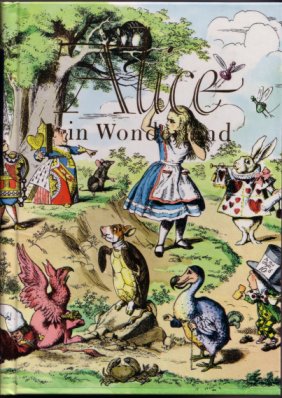
Alice in Wonderland is a classic I would recommend to any one of any age, but something about Alice's fearlessness makes me put it on this list. I've read this book time and time again but I can't help feeling that Alice's tenacity in the face of overwhelming bizarrity has had some hand in my making. Those formative years are tough, and when you're on the cusp of teenager hood, you're going to need the kind of role model who, when confronted with falling through the earth's core, for example, does not panic, but speculates where and when she is going to land. That's what growing up is like, like a crazy free fall through experience, and its good to know that Alice does land, the fall doesn't kill her, and is in fact actually the start of her story, not the end.


Okay, so not every 8th grader is going to be down for some Emily Dickinson, but for those of them that are, this one goes out to my homies. Yo, Emily Dickinson got me when I was 12. Emily didn't front; she knew all about the pain of being yourself, and her poetry spoke to me in a way that I think only dead authors from the 19th century can speak to little nerdy girls heading in what I call a "feelings" direction. Having this collection (or one like it, I've forgotten) was also helpful when I was going through my goth phase. Just saying.

There are other books worth mentioning here, ones that resonated with me or I was reading during a particularly tumultuous time in my life, but that list could go on forever. I think the topics I've covered here are as timeless as truth or dare, and its going to be necessary to pass these volumes down to the following generations, perhaps even more so as time goes by. What can we count on in this crazy world, for example, if not our own capacity for awkwardness? If not our questioning? If not our adolescent fear of everything and everything that could or couldn't even happen? The times are constantly a-changin', kids today have different worries and fears than the kids of yesterday, but that seems like all the more reason to address the ways in which we haven't changed, and maybe won't ever. Which is why, as a former adolescent queen of awkward now faking adulthood with an alarming alacrity and poise, I ask you, friends, Romans, countryman: truth or dare?

Friday, October 7, 2011

Vintage Spreads

Among the neatest finds in the UBC this previous week are the following treasures whose covers each highlight the epitome of haute couture for their respective epochs.

Exhibit A: Annette: Sierra Summer For the pink deer and scuba enthusiast in your life...this retro treasure features Annette Funicello engaged in all kind of adventures in the summer of 1950. The best part of this book is the illustrations; featuring her fancy dresses, a John Waters-look-alike, a Colonel Sanders-look-alike AND Scuba Steve:


Exhibit B: The Boy Scouts for Uncle Sam; this cover demonstrates the height of 1912 Boy Scout fashion, including whatever those thingies are that go over your boots to protect them from tree sap, bears, and given the political nature of this book, the sweat of Bolsheviks.


Exhibit C: Pine Man and Ax. This volume from a 1962 science series is an American history of man's utilization of timber resources. But mostly, I just can't get over this guy's rad beanie. Inside are all kinds of full-color illustrations of burly lumberjacks in plaid and suspenders. UNMISSABLE.


Exhibit D: And really, I have saved the best for last. J. Charles "Scotty" Thompson's treatise and cultural history on wearing a kilt, So You're Going to Wear the Kilt, is indispensible. This book delves into the history of all the elements of formal kilt attire for both men and women. It discusses tartans and plaid pattern distinctions. Even down to the engravings on dirks. It also describes the proper wearing and accessorizing of the kilt. A seriously fascinating and fun-to-read book on Scottish attire.


Thanks for reading, folks! Remember to bring your neato books to sell to us Wednesdays through Saturdays, 10 AM to 4 PM.

Thursday, October 6, 2011

One poem you should read right now. Especially if this hasn't been your week.


Dell'interno


aria from Giancarlo Cazetti's L'anima di Marina


Sad, you are sad, say the pitying ones.
I have consulted my wisest friends,
I have brought my troubles to the priest,
I have knelt till my knees are cold.


But in no place does the sorrow part,
this curtain that muffles me from light and warmth.
I stare into green leaves but they do not open for me.
I sit in the sun and the sun stays cold.


It is as if the world itself has said No.
It offers to me only a cold surface, dull
but slick, where I cannot grasp hold.
It tells me this is the bed I have made.


Inland, I long for the sea. It too
is cold, but with time the cold goes warm
and its roar is like a mother's heart
and its No becomes the one I speak.


This is from April Bernard's collection Romanticism. Buy it here. *Or *come on in, it's on the display shelf in poetry.


Tuesday, October 4, 2011

Destination: Trieste

"I'm leaving for (destination) tomorrow. Can you recommend a book set there?" This is a rather frequent inquiry that booksellers face, and one of my favorite. It is also fun ot listen to my coworkers attempting to describe the exact location of the Destination Literature section of our store, which is a little hard to define. "Go down aisle three about, let's see, three-fourths of the way toward the back of the store, and at the second intersection, take a left..."

While Lisa has described the unique location of the Destination Literature section as a winding "Venetian canal," now that I think about it, the section really more closely resembles another Italian city: neither here nor there, composed of diverse genres from a variety of nations, and, of course, populated with dozens of exciting literary names. You could find a similiar demographic if you were to travel to Trieste, Italy.

The Italian shelf of Destination Literature is crammed full of books guaranteed to guide your travels to the typical Italian destinations. Glimpse Florence through Forster's A Room With a View, take a gondola along the canals of Thomas Mann's Death in Venice, wander through Tuscany with multiple writers. Yet a few lesser-known titles on that shelf can take you into a lesser-known place, a corner of the world just about as hard to define as the Destination Literature section itself: Trieste.

You can find a great introduction to this city in Jan Morris's Trieste and the Meaning of Nowhere, a title that comes as close to defining the place as any I've seen. Trieste is an elusive city, situated on the coast of the Adriatic, somewhat cut off from the rest of Italy by that sea, and directly across the border from Slovenia. Morris describes Trieste as a place that often gets lost in the folds of the map. Trieste only recently achieved its Italian identity in 1954, having been occupied over the years by Austria, the United Nations, the British, and even Yugoslavia. The resulting population is, of course, a diverse one. I was not surprised when I learned that James Joyce wrote much of Ulysses there. The multiplicity of national identities must have been the ideal setting for what he described as a "Greek mother--a sea of a book," in a letter to one of his English students in Trieste.

That student was none other than Italo Svevo, whose works can also be found on the shelves of Destination Literature, provided that you have located the shelves. I particularily recommend reading Zeno's Conscience, but As a Man Grows Older is also quite charming. If you like the wandering melancholy of Svevo's Triestian prose, try out the works of the city's poet, Umberto Saba, who ran a bookshop there.

Saba wasn't the only poet to frequent these shores. Rainer Maria Rilke resided for a time in the Duino Castle, located just up the coast from Trieste, where he composed his Duino Elegies. (Mark Twain also visited the Duino Castle, but I think he was everywhere.)

"La mia anima e a Trieste" Joyce wrote in a letter to his wife, Nora, "My soul is in Trieste." Even Proust's sickly narrator longs to go to Trieste, imagining the city as "a delicious place in which the people were pensive, the sunsets golden, the church bells melancholy." And Natasha has just informed me that Nietzche's doctor sent him there. What were all these literary folk doing in this obscure corner of the world?

It's a question worth exploring through the literature of these writers, who all tend to circle around the elusive identity of the place. You can find the sweet melancholy tones of the exile in all of them. Simply ask the nearest bookseller how to find the Destination Literature section. But be careful, you may never find your way back.

There is still one Triestian author I have yet to mention, Claudio Magris, whose travel narrative, The Danube, wil take you from the mouth of the Danube River, wading waist high and sometimes deeper through European history and literature, and into Eastern Europe.

Which is where I will pick up next week, exploring the literature just across the border from Trieste, in honor of our upcoming event with Dubravka Ugresic, whose brilliant essay, "The Writer in Exile," I have just finished.