Tuesday, June 12, 2012

Dispatch from Book Expo America, or the "Halapalooza of Reading Quietly in a Room by Yourself"

New York is a city of extremes. As soon as I arrived I remembered how it was possible to love and hate the city at once. “You either sink or swim here,” Pat Carrier of the former Globe Corner bookstore told me as he guided me through the labyrinth of  publisher booths crammed inside the illogically (it seemed to me) laid out Javits Convention Center. I had come to NYC for two days of Book Expo America, beginning with an author breakfast with Stephen Colbert, Barbara Kingsolver, Junot Diaz, and Jo Nesbo, the last of whom, I thought, proved funnier than our host, who kept his punch lines to Fifty Shades of Grey jokes.

After coffee with Colbert (okay, it wasn’t quite as intimate as it sounds, and listening to Colbert crack Fifty Shades jokes over blueberry muffins wasn’t exactly an appetizing way to start the day), I stepped onto the exhibition floor full of publishers, authors, booksellers, librarians, and readers all conducting the business of books, which included much elbowing for the latest free advanced reader copy. I wandered disoriented among the chaos for quite some time, unsure of how exactly I fit between the world of swanky New York publishers and the woman in front of me who just jammed a display copy I am not certain was free into an already burgeoning shoulder bag of ARCs.

Unidentified BEA attendee with bags full of free books.
I felt exactly as I had when I first stumbled off my train from Boston the night before, weaving through Penn Station crowds and onto the metro–instantly overwhelmed, intimidated, and drained by the city. But when, 15 minutes later, I had emerged from the underground up onto a quiet, tree lined street in Greenwich Village, where I was lucky enough to find a room, I discovered that I could breathe again, and deeply. Perhaps it was the refreshing contrast from home, the thrill of new streets and shops to explore, perhaps it was the contrast with the crowds of the metro that made the sudden space and sunshine more charming than was their due, but I was enamored.

These extreme reactions continued at BEA, leaving me baffled at first, overwhelmed, then charmed and grateful at once. By the second day on the exhibition floor, I began to take a few faltering strokes. I found space to think and even to be inspired in a few of the educational sessions, and I began meeting people within the book industry, talking, exchanging cards. Once conversations began to open up, I began to see inside the work that was going on before my eyes. Though I had much to learn, I was no longer an outsider.

As Booksmith recently expanded our travel section, the session that most interested me at BEA was a panel of travel publishers talking about recent trends and changes in the travel industry. Yes, people are still traveling post 9/11 and economic crisis, but their habits and tastes and itineraries are constantly shifting, as are the sources of information travelers turn to when faced with an unknown destination. This was an interesting conversation to listen in on as a bookseller trying to find the perfect guidebook for each unique traveler to visit the Globe Corner at Brookline Booksmith, and also as a traveler myself who was at that very moment trying to be at home in a city she felt somewhat intimidated by.

On the exhibition floor.
Publishers of travel guidebooks are doing their best to meet the needs of today’s travelers, who are inevitably turning to the most convenient and local sources for information. I understood this impulse myself when selecting which coffee shop to frequent in my New York neighborhood. I didn’t use a technological device, but I did look at the lines. Where were the locals going? I followed suit, and was rewarded by freshly baked bagels smothered in so much cream cheese that my breakfast resembled a whoopie pie. Local tastes can sometimes seem infallible. And when choosing where to go or what to eat, technology allows us to access our college roommate who lives in the city, or general local opinion, in seconds. The publishing industry has to answer.

And they are. I was impressed with the thoughtful conversation going on around me at BEA regarding how to get the best, trusted, local information to readers, how to edit, filter, and control that information to make sure it is accurate, and how to remain a trusted resource for travelers. The conversation renewed my faith that the guidebook is not obsolete, a belief that is backed up every day I go into work and find our freshly-widened travel aisle crammed full of travelers who want to hear from their chosen guide, be it Rick Steves, Lonely Planet, Michelin, Frommers, Fodors, Moon, Eyewitness, or other trusted sources.

The title of another session I attended intrigued me: “Discovery, Recommendation, Serendipity.” The panel discussed the role of serendipity in getting the perfect book into a reader’s hands and how to create a context for these magical moments. Might it be possible, if not to do the work of serendipity  itself, to at least do the work that might create a space—physical or virtual—in which these moments between a reader and a text, might occur. After all, wasn’t it in the service such moments as these that we were all gathered at the convention, “the halapalooza of reading quietly in a room by yourself,” as Colbert put it?  Most of the discussion surrounded the tools we have to create such contexts, such as blogs and websites, which can be used to reveal the inter-connectivity of stories and make apparent the threads of culture that make up those stories, in the hope that one of these threads might cross with, connect to, coincide with, a reader’s life experience–thus creating a serendipitous and meaningful moment.

Boy practicing violin on the street in my neighborhood.
On either end of my days at the convention, I was getting to know my neighborhood, striking up conversations with the local baristas and booksellers I discovered along the charming streets of Greenwich Village. That evening, as I stumbled back to my room, I passed a used bookshop, just two doors down from my own that I had somehow missed upon my arrival. I did not stop in at first—I had to take off my shoes after a day of traversing the exhibition floor. But I ventured out again an hour later. And there, staring out at me from the store front window, was Fernando Pessoa. I have had a fascination with the poet and his city of Lisbon for years now, and I ducked inside to inquire about the book.

“I just put that out, 90 seconds ago!” the bookseller inside told me, and I reflected that had I stopped by earlier, Pessoa and I might never have exchanged that potent glance that sometimes passes between a reader and a book. The thin volume, I sensed, was something of a rare find, from a 1985 London exhibition and full of precious autobiographical information surrounding the life of the elusive poet and his over 72 alter egos, or heteronyms.

“Can you part with it so soon?” I asked the bookseller, whose name was Zeke. He was soon convinced that he could, once I had told him of my obsession with Lisbon and opened my wallet. After we completed our conversation and transaction (which was, Zeke admitted, the fastest sale in Left Bank Books history), we exchanged cards (I’d gotten into the habit at BEA). I stepped out the door into a fresh downpour but did not mind. I knew that I had just experienced the serendipitous moment we had been discussing at BEA. There was the work of the artists, writers, curators, publishers, and a bookseller about to make his fastest sale behind it, but there was also the sense of a connection made up of countless threads beyond my control magically coming together in that moment when Pessoa caught my eye. I suddenly saw the chaos of the exhibition floor at BEA as many of those countless threads weaving and interweaving and creating a web of meaningful conversation that, at its best, might somehow converge to create a moment for a reader like the one I had just stumbled into. And I left BEA motivated to work to create a context and place for others to discover their own moments of serendipity, when a story they had no idea was coming, converges with their own.

Whenever I visit NYC I always end up, on my last day in the city, seated on the banks of the Hudson with my back to the skyline, staring out into open space, absorbing it, if at all possible. Perhaps it’s the Midwest in me, longing for horizons. For while I have learned to love the city, I have also discovered its pace: sprint and recover, sprint and recover. This was the strategy my Iowa high school basketball coach once instilled in me, and the mantra I found myself repeating under my breath whenever overwhelmed by the crowds. And while I can’t say I prefer the pace to the slow laid back swagger of the West Coast, almost lackadaisical in comparison, or to the industrious steady tread of the Midwest, or to the unceasing marathon that is Boston, I find that somehow it works—I lose my breath but always find it again, I sink, but then—buoyed up by some unlooked for thrill or serendipitous moment—I float.

Monday, June 11, 2012

What you leave behind

Hi! I'm just returning to the blog after a solid 4 months of hiding from what can only be described as the most terrifying, teeth pulling, bladder excavating time of my relatively truncated adulthood. I've missed telling you things about the back of the store. I have some new post-its. The store is doing well, so I have plenty of paper supplies. Most of them recycled, re-purposed, re-used. We are vigilantes about our scrap paper, and our Eco footprint, has been reduced to that of a small water fowl.

I was looking for an image to illustrate this, and I managed to come across this article on Sokushinbutsu , or self mummification. It got me thinking about what legacy, if any we actually want to leave. I mostly think about this kind of thing when I'm riding my bike without a helmet or my once a year reading of Emerson's  Self Reliance. (I highly recommend this practice, it's easy, and you are likely to sign up for a community class on, oh, let's say... beaver pelts or viola stringing.

The most interesting part of Seppuku, (if you ask me) is the fact that the Samurai must write a death poem before they eat their final meal and get on with it. Again; here is the idea of legacy creeping across the white glow of my google search bar and into my fingers. I tried with little luck to find a collection of these poems, and instead I rediscovered the incredible, brilliant  final collection of poetry written by UMASS professor Deborah Digges, called The Wind Blows Through the Doors of my Heart .


The poems in here have the scent of her suicide on them, and she wasn't completely finished with it before she passed, but despite this the collection stands whole, a triumph of will and life. Every time I walk past our poetry section, and see this cover prominently faced out, I am reminded of her incredible strength, and her luminous, grim genius.
And there again, is legacy. What will I have left if god forbid my little bike takes me on a rogue mission into oncoming traffic? A few blog posts, some unfortunately age inappropriate tshirts, Easter cards form my mother, and my poetry collection. That should do it.

Friday, June 8, 2012

Hey Daddy-O!


Father's Day is nigh, and to celebrate, here are a few famous dad-and-son literary duos:

Walter Dean Myers and Christopher Myers. Walter Dean Myers has written hundreds of books for young adults and his artist son has made a plethora of his own picture books in a bold style. Christopher even does his own version of Carroll's Jabberwocky that is super cool.

Ernest Hemingway and Mariel Hemingway. Granddaughter of Papa Hemingway herself Mariel has written a few books, mostly memoirs and health books. Though she is mostly an actress and activist, but we can get behind that.


Kingsley Amis and Martin Amis. Martin grew up under the tutelage of a literary heavyweight, and has made his own unique name for himself. Apparently Kingsley hasn't always been too impressed by his son's novels, though, complaining once:  "I can point out the exact place where he stopped and sent Money twirling through the air; that's where the character named Martin Amis comes in...Breaking the rules, buggering about with the reader, drawing attention to himself." Maybe Martin forgot to take out the trash that day?

Leo Dillon and Lee Dillon. Unfortunately, Leo Dillon, the gentlemanly half of married artist duo Leo and Diane Dillon passed away recently, but the artists did collaborate with their son Lee, an accomplished photographer. Pish Posh, Hieronymous Bosch features Bosch-style framed paintings by the couple photographed by their son.

Stephen King and Joe Hill. The son of horror legend King has written a couple of moody, atmospheric novels with dark twists. He did so, too, without outing himself as King's son and earning critical acclaim before a reviewer caught on.

Thursday, June 7, 2012

Journaling

Hello! I'm Booksmith's newest blogger, and one of it's newer booksellers (I started last October). I have to admit, I was a bit reluctant to agree to write for the blog. For the past year or so, I've started to slowly step away from the internet so that I could focus more on my own writing. I tend to obsessively check email, spend more time than I'd like on Facebook, and I wanted to keep the time I spent on my computer more or less focused on working on my novel. But then I realized that I talk my co-workers' heads off about a lot of book and writing related things. So, for their sake, I think it's time I subject you, our dear, loyal, blog fans, to that rambling instead.

As part of my commitment to spend less time on the internet, I've started to write more in longhand. I had this journal that my old co-workers gave me as a parting gift a few years ago, one that I had only written in sporadically. It was a hardcover journal with blank pages. I had to crack the spine a bit so that I could lay it flat to write in it, and on the blank pages, my handwriting started to slant. But I found that I really liked having to slow my thoughts down so my hand could keep up. And growing up with one of those lock and key diaries, it felt like going back to the roots of what made me want to be writer.

I filled my old journal quickly, and treated myself to a new one. Have you seen our collection of journals here at the Booksmith? We have *so* many beautiful journals, in every size imaginable. We even sell those lock and key ones I used to write in as a kid. The one I ended up buying is a soft cover, 7.5 x 10" Moleskine with an expandable pocket in the back. I love it. I put postcards and pictures in the back pocket, and I like how easy it is to curl up and write with it on my lap. I can't think of a time since I bought it in January that I haven't had it with me.

I recently taught a one-day jump start your fiction writing workshop at Grub Street, Inc. here in Boston, and  I started the class with a journal writing exercise. We read a passage from The Journals of John Cheever (which I'm currently reading, and love) and as a warm-up before the fiction writing, the students spent twenty minutes free-writing about a recent, memorable day. A few had come in with a laptop and I asked that for this exercise, they write longhand only. For the next exercise, I told them they could bring back out their laptops, but no one did. They said they actually liked writing in longhand.

So if you're looking for something new to try this summer, try writing in a journal. Maybe I"ll convert you to the longhand form too! 

Sunday, June 3, 2012

More than a Guide Book

I'd already heard the  story of how Charles de Gaulle left France during an uprising and told his country to shape up (and they did) a few times from my boyfriend's father, who lived in France at the time. But I'd never heard the slogan of that student revolution "La Beaute est dans la Rue," or understood just what the riots of 1968 were about until I read John Baxter's contribution to the Museyon Guide series, Chronicles of Old Paris , a guidebook that allows the reader to travel not only through the streets of Paris, but through time.

Each of the twenty-nine chapters focuses on a specific person, invention, trend, or revolution (militaristic or artistic) that contributed to the development of the city of light we know and love and long to travel to today. And if you do travel there, a map to each significant site is included at the end of each segment.


To read more about the beauty in the streets of Paris, travel to globecorner.com.

Saturday, June 2, 2012

'Tis the season for grad-u-a-tion, fa la la la la, la la la snore

Yesterday, the University of Massachusetts, Boston's graduating class of 2012 all put on their caps and their gowns and lined up and received their diplomas. While I am part of that graduating class, I did not put on a cap or gown, nor did I even rent one, nor did I attend the graduation at all. Instead, I woke up in Newton, after drinking beers and watching "Community" last night with my sister and step mom. I drove the car home, (I'm working on getting my license) ate some quick breakfast, grabbed my gym bag and went to the gym. I came home, showered, and went to work at the store. The parents of my closest friends were appalled when I told them I wasn't going to attend my own college graduation. The reasons were many: I was a transfer student to UMB; I was halfway through art school before I realized it wasn't for me. By then, I had already made a comfy circle of friends, and wasn't really looking for more. In addition to not having any friends at UMB, I've been in college for 6 years, and it has been a grueling, tedious, anger-filled battle to the bitter end. I feel as if I've won a war. I felt no reason to engage in the ritual of graduation in this particular situation. My parents were thrilled that they would not be required to come sit through a long, hot, boring ceremony. I am thrilled I don't have to pretend like my college experience was the same one that the normal, smiling, valedictorian-quality kids had, as they jostle each other and grip diplomas and feel like they're going to change the world. I don't want to change the world. I work my book store job, and I pursue a bunch of creative endeavors, and I don't know what I'm going to do now that I've graduated. I'm planning on making it up as I go along.

So was it all worth it? Were the countless hours spent dragging myself down hallways and filling in scantron bubbles, the cafeteria food, the early mornings and late nights, were they worth it? Eh, kind of. Most of it was stupid and designed to judge me as a human being from a seat of requirement I do not necessarily agree with. I had to jump through a lot of hoops that I didn't really feel were relevant. I had to work collaboratively with a lot of idiots that dragged me down (really? You're a senior in college and you don't know how to make a PowerPoint presentation? Really upsetting, really, truly, hideously upsetting), and so I can't say that I feel like I really embraced the world of academia. I guess, in the end, I'm not sure I trust what I suspect to be a host of predominantly white and predominantly male people to decide a curriculum on which my worth as a human being is placed, and that really got in the way of allowing me to realize my full potential as a student. I'm just not 100% convinced that I need to learn what that host of staff thinks I need to learn. I know that's so "On the Road" of me, but I'm not fond of that extreme either. I just exist. I excuse myself from the necessity of excuses, politely and with much bowing, as I walk backwards through this conversation.

However. I did get to read a lot of really sweet books in school. Which brings me to this: Zoe Hyde's English Degree in 10 Or Fewer Books (in No Particular Order). These are all books I read in class that fundamentally changed the way I read and interpret literature, or any kind of content, for that matter. These are the books I feel that everyone should read, the books that are the building blocks for my particular canon, and they are all books I read in class of some variety. 

1. Bartleby the Scrivener by Herman Melville.
I'm not one of those oh-so-trendy Melville fanatics, I was assigned Melville during a time when I felt particularly rebellious towards school, and I think I had just experienced a break up as well, so I did a lot of skimming of Melville's words, (and a lot of ordering from Foodler) however, I did read this short story all the way through, and the times I have gotten a reference to this story made by a tv show or co-worker or whatever are innumerable. I think it's one of the most heavily referenced fictional tropes there is, perhaps because it is so short and the main character has such defining qualities ("I would prefer not to"). Whatever the reason, do yourself a favor, and read the story, if only so you can bring it up at parties and be able to say you've "read Melville", as in, "oh yes, I've read Melville - gripping stuff, wot!"


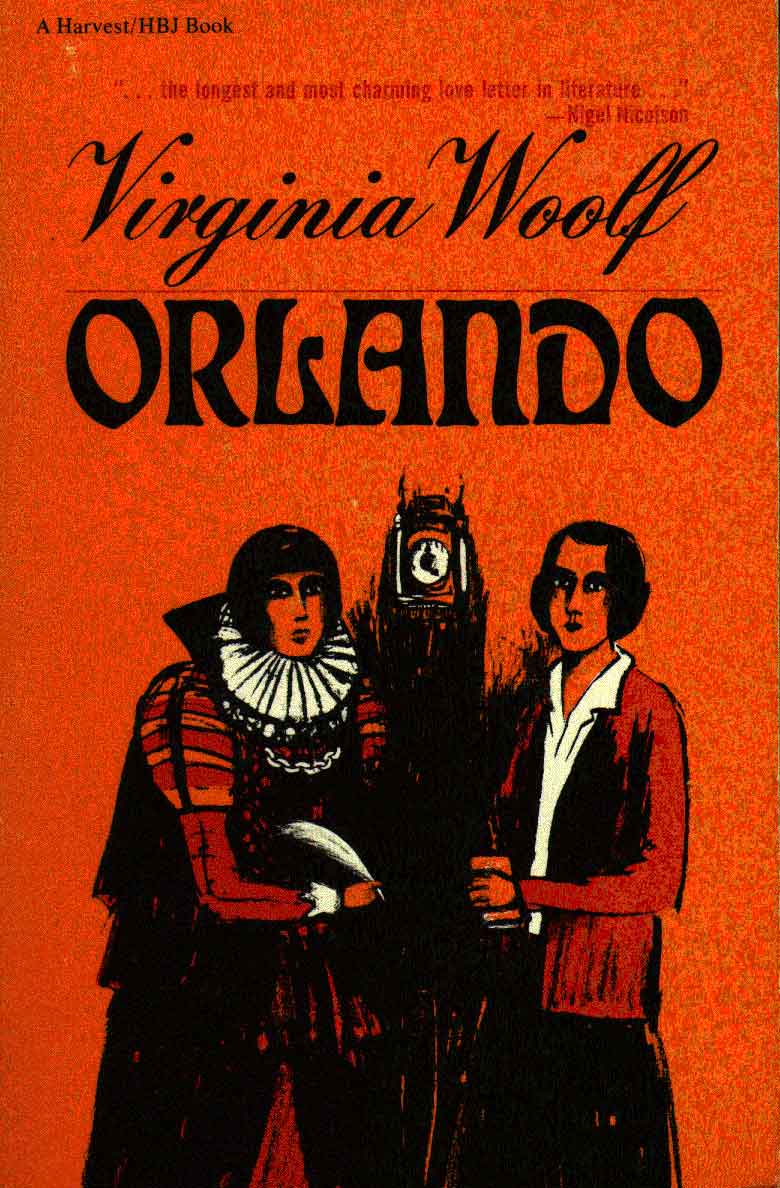
2. You may choose one, if you must: Orlando or Mrs. Dalloway by Virginia Woolf.
The best class I ever took was a class about Virginia Woolf, which was taught by my favourite teacher. These two books were my favourites from that class; but wait, I hear you say. What about A Room of One's Own? What about To the Lighthouse? What can I say, V. Woolf had a lot of hits, but these two are really something. In the first, the main character changes gender almost inexplicably halfway through the novel, in an otherwise fairly non-fantastical story. Orlando is also, likewise inexplicably, a highlander who lives forever through the ages. The rest of the story is not quite as gripping, but I must advise all young, angry women to read this.

Mrs. Dalloway is just so good. Any novel that takes place entirely in one day is ballsy, but I loved the - what I perceived to be - undertones of straight up insanity from Mrs. D placed throughout the novel, but most noticeably, right around the beginning of the story, where she talks about strands of nothing floating through the air. Fun!


3. Things Fall Apart by Chinua Achebe
I've been assigned this book a few times in classes, and once in high school, and I know this is what every dumb book review claims but every time I read it, I really did get something new out of it. I have a love/hate relationship with books where the protagonist is not likeable. If it strikes me in the right way, like Things Fall Apart did, I can absorb the material and get a lot out of it. Right now, however, I'm struggling with the HBO series "Girls", for much the same reason. I just don't like it when people are mean to their parents if they don't deserve it, ya'll. I'm aware I'm making this point not four paragraphs after mentioning I hang out a lot with my step mom. I have other friends you guys, friends my own age. I swear. I swear!


4. A Long Day's Journey into Night by Eugene O'Neill
I have not read a ton of plays that were not written by Shakespeare, but somehow this little guy snuck itself into my curriculum, and I liked it while reading it even before I saw the movie with Katherine Hepburn, Ralph Richardson and Jason Robards, among others. The movie is so good, and the play is an interesting portrayal of a well-to-do but struggling family; an alcoholic father and brother, a sensitive, tuberculosis-having youngest son, and at the family's hard, black heart, a mother who has quietly become addicted to heroine. Right?! Heroine! Like, for real, heroine. Like, she disappears upstairs every once in a while and comes down all glassy-eyed with pupils the size of saucers, and everyone's all, "Mom, you really need to stop doing junk" and she's like "let me just feel your face for a minute."


5. Collections by William Carlos Williams or Emily Dickinson
The poetry selection was hard, since I love poetry a lot because of, you know, copious feelings. However, since I have to choose, I guess I would say, if you want the bare bones minimum of the Zoe Hyde English Degree poetry requirement, you should just read these collections. The first isn't actually the collection of WCW I wanted to recommend, if you can find it, the one of him in the tree is really good, but it doesn't really matter. Read his old stuff first so you can fall in love, and then his later, more disjointed prose won't be as jarring.

Emily Dickinson is self-explanatory. Are you nobody? I'm nobody too. Hop to it, students.

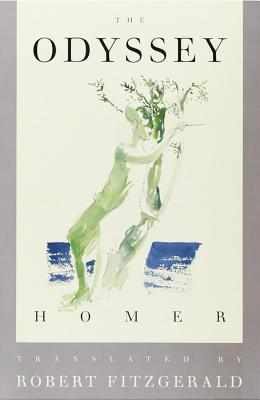
6. The Odyssey by Homer. Robert Fitzgerald translation MANDATORY!
I first read The Odyssey when I was a freshman in high school, and could barely perform mundane activities like tie my shoes or wash my hair, let alone read a book like The Odyssey, so I didn't. Nope, straight up did not read it. Then, when it was assigned later in high school, I tried to read it, but my heart wasn't in it. "I just don't understand the book", I claimed. Then, finally, during a weird literature class in college, I was introduced to the epic poem for the third time, this time, in the Robert Fitzgerald translation. I read the whole thing, cover to cover, and whats more, understood it all. I'll never be sure if it was the third-times-a-charm or Fitzgerald that finally untied the knot of my own ignorance, but either way, I'm assigning this translation and bidding you good luck.

7. In the Shadow of No Towers by Art Spiegelmen.
I didn't want to have a curriculum devoid of graphic novels, but alas, I was not assigned any graphic novels in school, so this suggestion comes care of my friend Ashley, who read this in high school, so it counts. I read it outside of school. This book represents a lot of things to me, namely, the struggle that I think a lot of creative professionals (and non-professionals) found themselves when the towers fell. I suppose, after the attacks, all Americans were struggling to re-find their place in society, in their families, in their personal world. This book also has the benefit of depicting a part of our collective American history.


8. Othello by William Shakespeare.
I took a ton of Shakespeare classes in college, I'm not really sure why. I love Shakespeare, but I would not really call myself a big enough fan to have taken 3 whole courses on the subject. Buuuut, I did. Othello is probably still my favourite of the plays that don't have fairies in them. I love the power struggle between Iago and Othello. Although, kind of a lack of awesome female characters....lame.


9. Slaughterhouse 5 by Kurt Vonnegut
This is the only novel by Vonnegut I have read to this date, and when I told said friend Ashley that, she really mad at me. I don't know how I got through high school and 6 years of college without being assigned more Vonnegut, but there you have it. I did read this novel, however, so I am assigning it in particular, but others would have me tell you that you should read all of Vonnegut, right now. In order to meet the Vonnegut requirement at UMZ, you must read a Vonnegut novel, that's all I'm saying.


10. The Wasteland by T.S. Eliot
HAHA psyche! You thought you were going to get away with one epic poem and some collections?! LOL, my friends. Nopers, you're also going to have to read this monster. Don't worry, we'll skim the footnotes, we'll talk about it in class, I'll bring doughnuts, everything is going to be okay. We are going to get through this together, as a team, and I guarantee, by the end of it, you will understand like, at least a third of this poem. That's a lot!


Congratulations! You have completed your course of study here at the University of Massachusetts, Zoe's English Degree in 10 Books Or Less (in No Particular Order)! You have the benefit of, essentially, getting the best and most poignant part of my degree without all that filler and dumb stuff I had to do in between, like Math and Biology. Please print this out, fill it out, put it in a frame, hang it on a wall, and go out for a lobster dinner immediately.


Friday, June 1, 2012

Hittin' It Lit

Fifty Shades of Grey is all that people are talkin' about these days. My theory is that the book has conspiracy-theory-worthy levels of publicity and the content, subject, author or writing style aren't really relevant in its popularity. Whether you loved it or it wasn't your cup of tea, here are a few suggestions from the UBC for some more saucy reads:

Marquis de Sade We got this cool volume of three of his most infamous books, plus some scathing letters and essays. It'll stimulate your ... mind?

Lasso Around the Moon The carnal desires of a man torn between two ladies.

Maiden A 30 year old woman is a virgin but doesn't want to be anymore. This saucy little paperback is complete with 1970s era advertisements for cigarettes and aphrodisiac perfumes.

Delta of Venus If you were troubled by the sexual politics in Fifty Shades, this book of steamy stories written by a good writer should do the trick. The women in these stories are self-possessed, fully-realized and living some EXCITING bohemian lives.

Fear of Flying An important work of second wave feminism, in which a woman explores casual boot-knockin'.

Venus in Furs Severin, Severin. The original of masochism; Severin likes it when ladies tell him what to do. Let's turn Fifty Shades on its head!

Tropic of Cancer And if none of these are saucy enough, you can get downright crude in the streets of 1930's Paris with the help of American-at-large Henry Miller.

I'd also recommend Lady Chatterley's Lover by D. H. Lawrence, and book buyer Lisa recommends Story of O by Pauline Reage but we don't have a used copy of either. So come in and buy new ones upstairs!